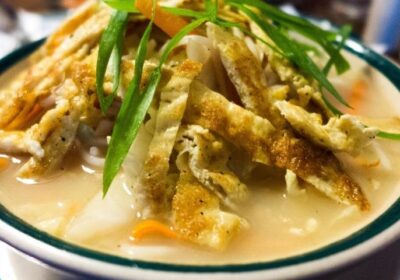
Why Food Has Become the Heart of Experiential Travel
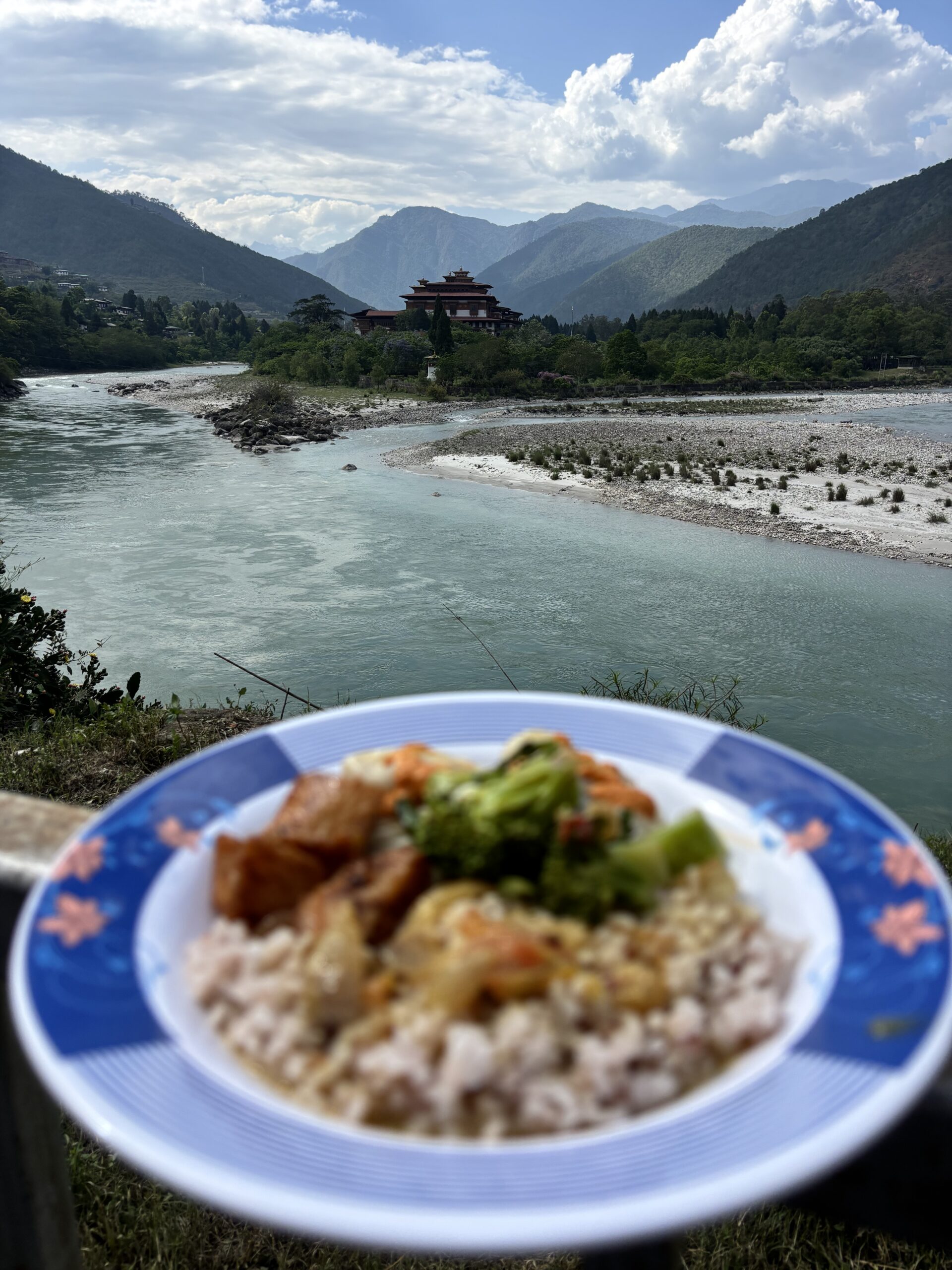
When I started travelling in 2004, food was something that happened between sightseeing. A meal was a pause, a way to refuel before the next monument or viewpoint. I don’t think I once planned a day around one.
For the first several years of designing journeys, my travellers felt the same way. The questions I got were about hotels with the best views, about must-see attractions, about whether we could squeeze in one more place before the flight home. Food came up as a logistics question — where can we grab lunch near the fort?
That has changed almost completely, and faster than I expected.
These days, one of the first questions I hear isn’t “where should we go” but “what will we eat” — and rarely just that. Who will we eat with? Is there a family we could cook with? Can we visit a farm? Where do people who actually live there go? Across the journeys we’ve designed at Rootsvida over the past decade, food has moved from the margins of an itinerary to the centre of it. And I’ll admit I’m glad, because it has made my job far more interesting.
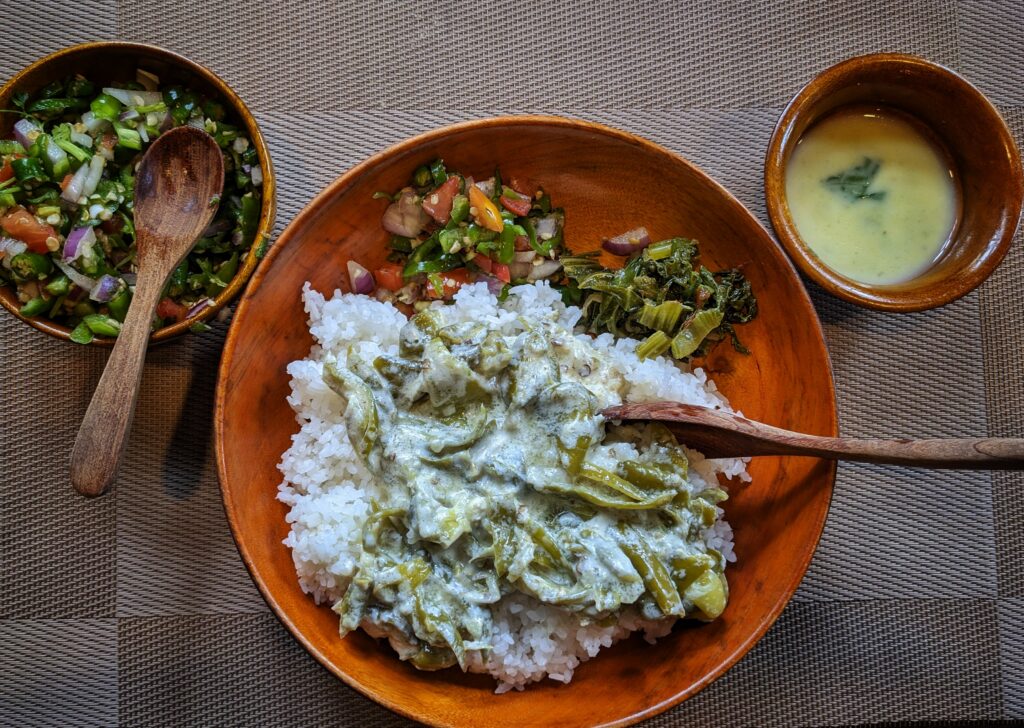
The meal people remember more than the monument
Ask someone about a trip they took five years ago. They’ll often fumble on the names of the places they visited — the palace and the fort blur together, the order of the days goes soft.
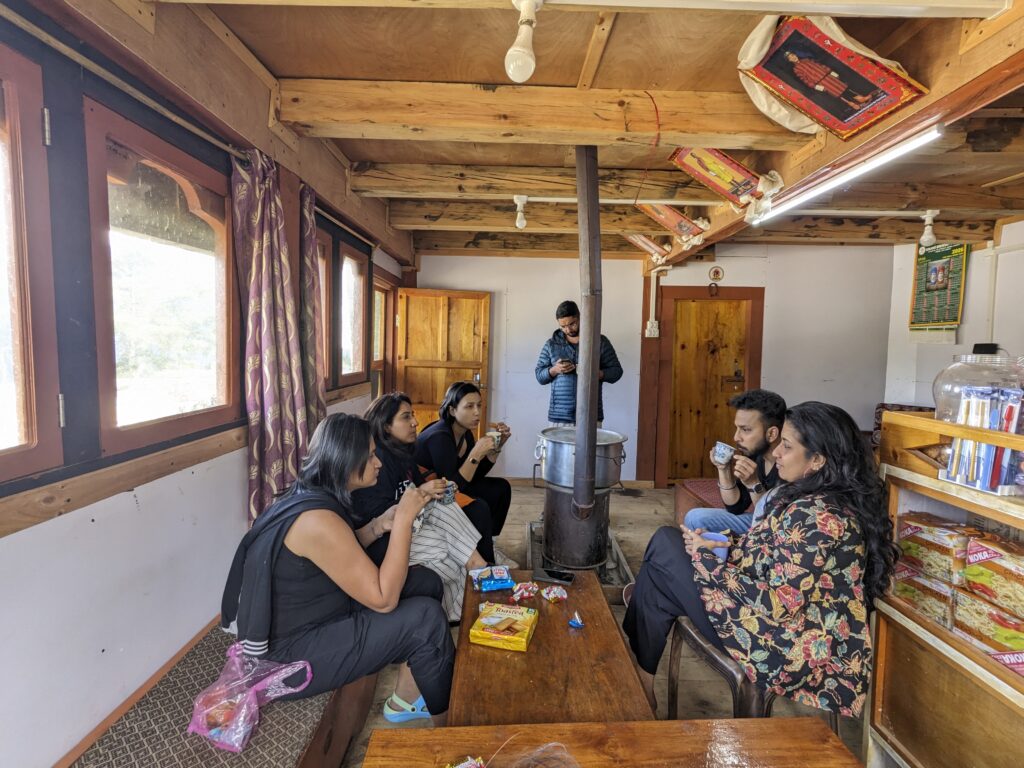
But they’ll describe, in detail, the grandmother in Nepal who showed them how to pleat momos and laughed at their first attempt. The farmer who waved them into his orchard and turned it into lunch. The bowl of thukpa after a cold morning in Ladakh, when their hands were too stiff to hold the spoon properly. Breakfast on a ridge with the Himalayas going pink. A long wooden table in a Bhutanese farmhouse and the noise around it.
People don’t remember every place they went. They remember how a place made them feel, and food holds feeling better than almost anything else. A meal ends up being less about nourishment than about memory — which is, I think, why so many of them get retold at dinner parties years later.
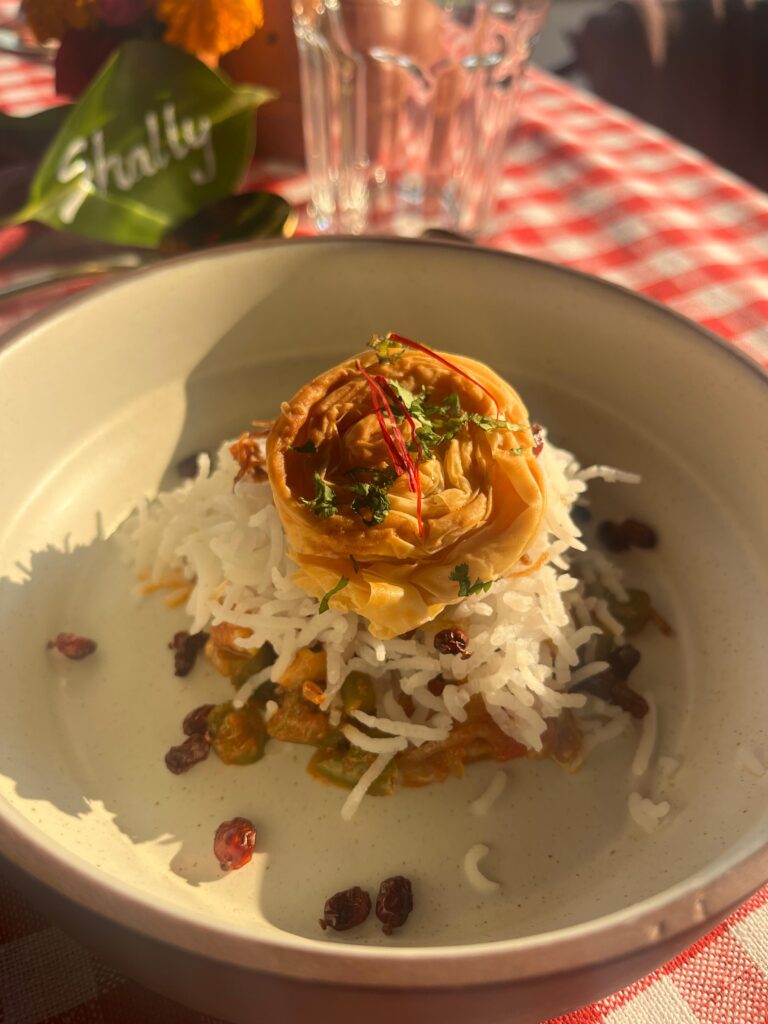
Luxury is quietly being redefined
For a long time, luxury travel meant exclusivity — the five-star property, the Michelin room, the private lounge, ingredients flown in from somewhere else. Some of that still matters. But the experiences our travellers talk about afterwards are almost never the ones with the highest price tag attached.
They’re a private breakfast set up above the Everest region after an early climb. A lunch table at Chele La Pass in Bhutan, where I’ve watched corporate leadership teams stop mid-strategy-session because nobody wanted to break the silence of the mountains. Meals inside heritage homes and royal residences in Ladakh, where the person serving you can tell you which grandmother the recipe came from. Farms across India where lunch starts in the field, and you carry in what you’re about to eat.
None of that is luxurious because it’s expensive. It’s luxurious because it can’t be copied. You cannot order that breakfast anywhere else on earth. Increasingly, that’s the thing people are willing to travel for — not another beautiful restaurant, but a meal that could only have happened in that one place, on that one morning.
You don’t just eat the food, you read the place through it
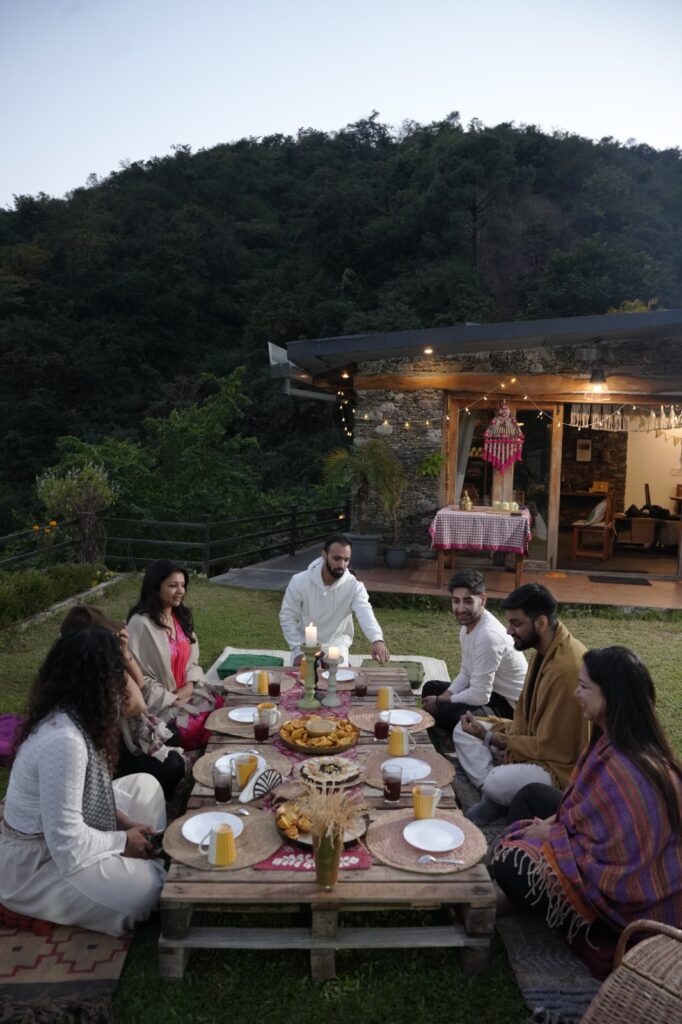
Food is the fastest route I know into understanding a destination. A museum will give you the history and a guidebook will explain the architecture, but a single shared meal hands you the climate, the agriculture, the trade routes, the religion and the family structure all at once, without anyone lecturing you about it.
Sit down with a Ladakhi family over barley, apricot preserve and butter tea and you’ll understand what it takes to live somewhere that harsh — the fat in the tea stops being an oddity and starts making complete sense. Eat in Bhutan and you’ll work out fairly quickly why chillies are treated as a vegetable rather than a seasoning. Walk through Vietnam with a culinary expert instead of a conventional guide and every bowl of pho, every market stall, every regional variation turns into a story about geography and migration and who ruled what, when.
Something happens around a long table
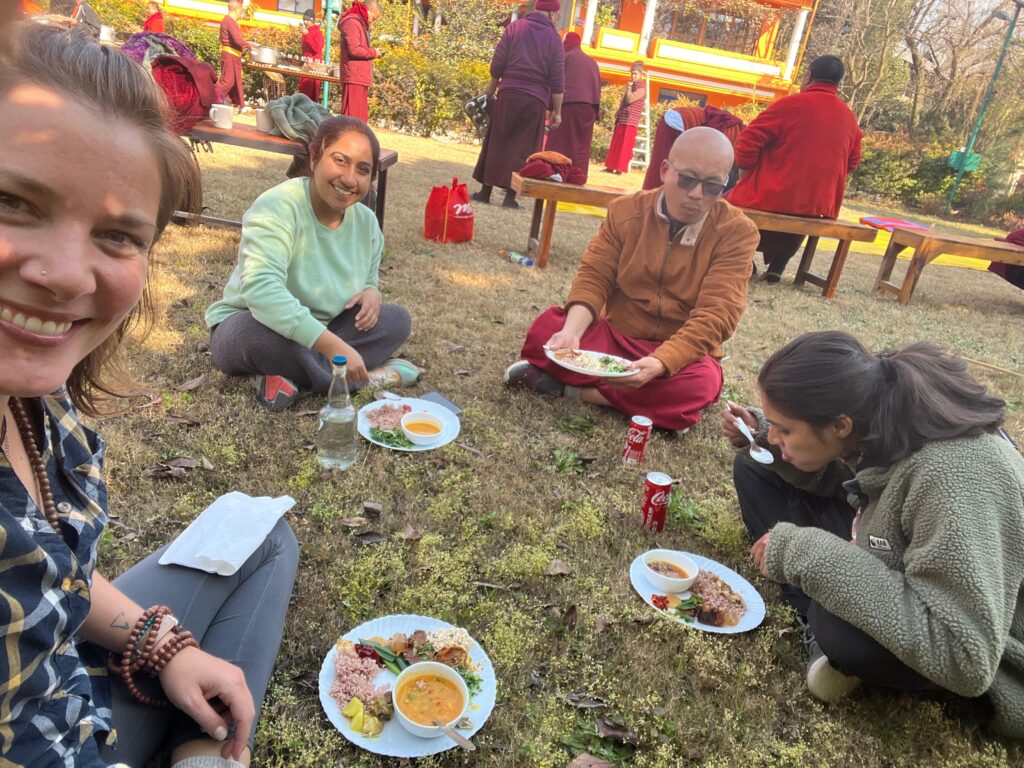
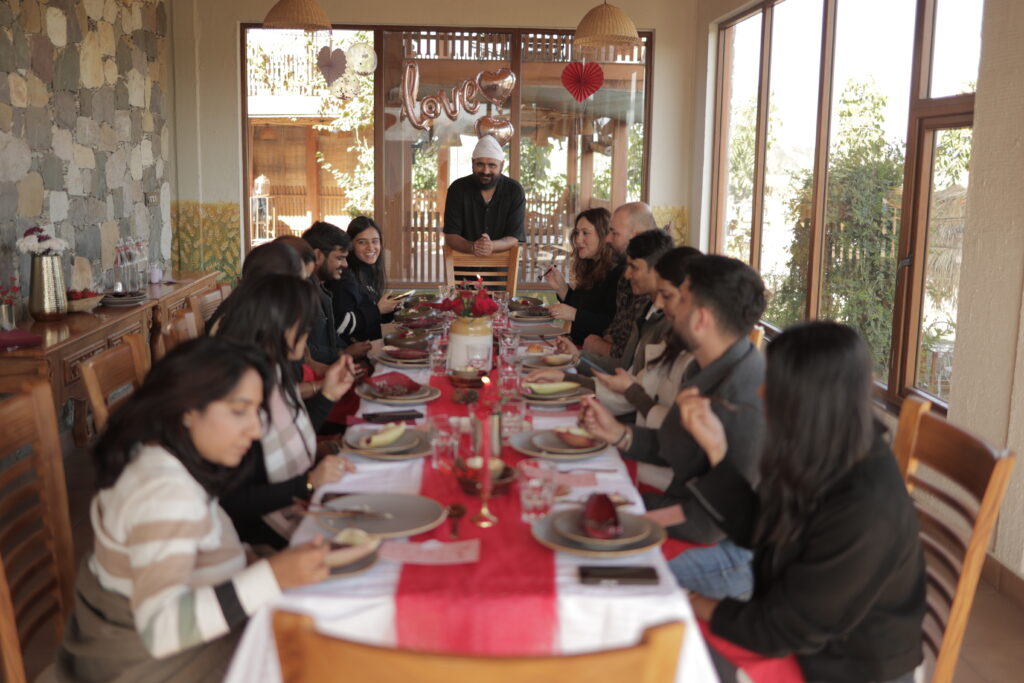
The most unexpected thing we’ve learned at Rootsvida has less to do with destinations than with people. We started building long community tables — in orchards, on mountain roads, in village courtyards and on farms — partly because they photograph beautifully. That isn’t why we keep doing it. We keep doing it because hierarchy tends to fall apart at a shared table. I’ve watched CEOs end up next to interns and forget to be senior about it. Solo travellers who met at breakfast still message each other years later. People arrive guarded and leave three hours later swapping recipes and phone numbers.
I’ve seen conversations happen over lunch in a field that two days of conference-room agendas hadn’t managed to produce. Every culture on earth understands hospitality, and I suspect that’s the reason. Being fed and feeding someone is one of the few things that doesn’t need translating.
The new souvenir doesn’t go on the fridge
Souvenirs used to be about proof. A keychain, a magnet, a snow globe — I was here.
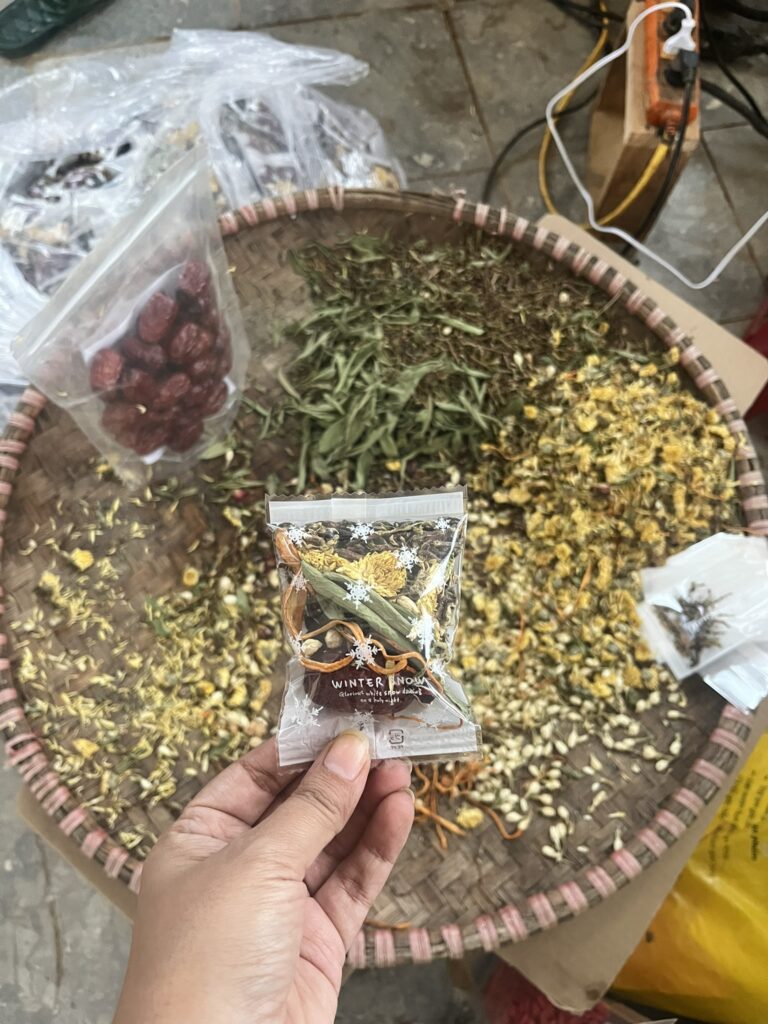
What I see going home in suitcases now is spices, local teas, wild honey, traditional salts, herbs, homemade preserves. We’ve shifted our own welcome hampers the same way, filling them with regional ingredients sourced from the communities we work with instead of generic gifting. We’d rather send travellers to a producer we trust than to an airport shop, and we tell them whose farm it came from.
Months later the messages arrive. Someone cooked with the Bhutanese spices on a Sunday and was straight back on that hillside. Someone makes their morning tea with herbs from Ladakh and thinks about the trip every single day.
Those aren’t souvenirs, really. A magnet reminds you where you went. An ingredient lets you go back.
What’s actually changing is intention
The bigger shift may not be about food at all.
Information isn’t scarce any more. Anyone can find the top-rated restaurant, the photogenic café, the viewpoint that shows up in every feed. What’s genuinely hard to find is context — a sense of belonging somewhere for an afternoon, and someone willing to explain it to you.
So the questions have changed. Can we eat with a local family? Can we visit the farm? Can we learn to make this? Where does this ingredient actually come from? People aren’t looking to consume a place any more. They want to take part in it, even briefly.
At Rootsvida we’ve always thought the best journeys aren’t measured by how many places you covered. They’re measured by what you can still describe a year later. Sometimes that starts with a sunrise, sometimes with a conversation, and very often with a meal — because food is one of the few things that reliably slows people down. It makes you sit longer, ask one more question, listen to a story you weren’t expecting, try something you can’t pronounce.
After all these years of designing journeys, I’ve mostly stopped counting destinations. I count conversations, and the people, and the meals that keep feeding us long after we’ve unpacked.
Travel with us
If you believe a journey is about more than ticking places off a list, we’d love to plan one with you. Whether it’s a meal with local hosts in Ladakh, harvesting your own lunch on a farm in rural India, walking Vietnam’s markets with a culinary expert, or a table set somewhere improbable in the Himalayas — we design journeys where food becomes the way in.
Because the best journeys aren’t just remembered. They’re relived, one meal at a time.